Speak to one of our advisors directly
Every search is led personally by Mark or Laurie, with the expertise and the time to give your brief the attention it deserves.

Laurie Thomasson

Mark O'Neill
Speak to one of our advisors directly
Every search is led personally by Mark or Laurie, with the expertise and the time to give your brief the attention it deserves.
Laurie Thomasson
Mark O'Neill
June 3, 2025
•
3
min. read
By
Laurie Thomasson
The UK’s office market has undergone a quiet revolution. What began as a short-term pivot during the pandemic has crystallised into a long-term strategy: hybrid working is here to stay, and it’s fundamentally reshaping how businesses approach office space — especially in the managed office sector. At Spacepoint, we’re seeing the ripple effects of this shift firsthand. Let’s break down what’s changing, why it matters, and how the managed office market is evolving to meet modern demands.
The rise of the hybrid workforce: Before 2020, the concept of flexible work was often a perk. Now, it’s an expectation. A recent CIPD study found that 71% of UK employers plan to adopt hybrid working models permanently. The result? Businesses no longer need traditional leases with rigid square footage based on 1 desk per person. Instead, they’re seeking agility – and that’s where managed offices shine.
Managed offices offer a hybrid between traditional and serviced office spaces, combining the best of both worlds. The convenience and flexibility of serviced, with the privacy and sense of establishment of a traditional office.
Like serviced offices, they often come fully fitted and furnished, with all costs bundled into a single monthly bill. The costs are managed on your behalf, simplifying budgeting and administration. There will also be a degree of customisation.
Managed also retains the key advantages of traditional spaces: they are entirely self-contained and not shared with other tenants - giving you complete control, privacy and sense of establishment.
In the hybrid era, managed offices offer businesses the perfect blend of control, flexibility, and scalability.
Some businesses are downsizing their footprint — but upgrading their experience. Instead of paying for, say, 100 desks, companies want 60 instead with more collaboration areas and hot desking to account for the busy days. Managed offices enable this shift by offering tailored layouts without long-term commitments.
Hybrid work introduces more variables — headcount changes, team rotations, satellite offices. As a result, businesses need agreements that flex with them. Managed offices offer terms starting from as little as 12 months, reducing exposure and giving flexibility.
With employees in the office fewer days per week, every visit needs to count. Tenants now expect spaces to include amenities such as:
It’s no longer just about space — it’s about experience per square foot.
Hybrid teams crave easy access. Locations near major transport hubs or within vibrant neighbourhoods are in high demand. Managed office providers are expanding in these zones to meet the commuter-friendly brief.
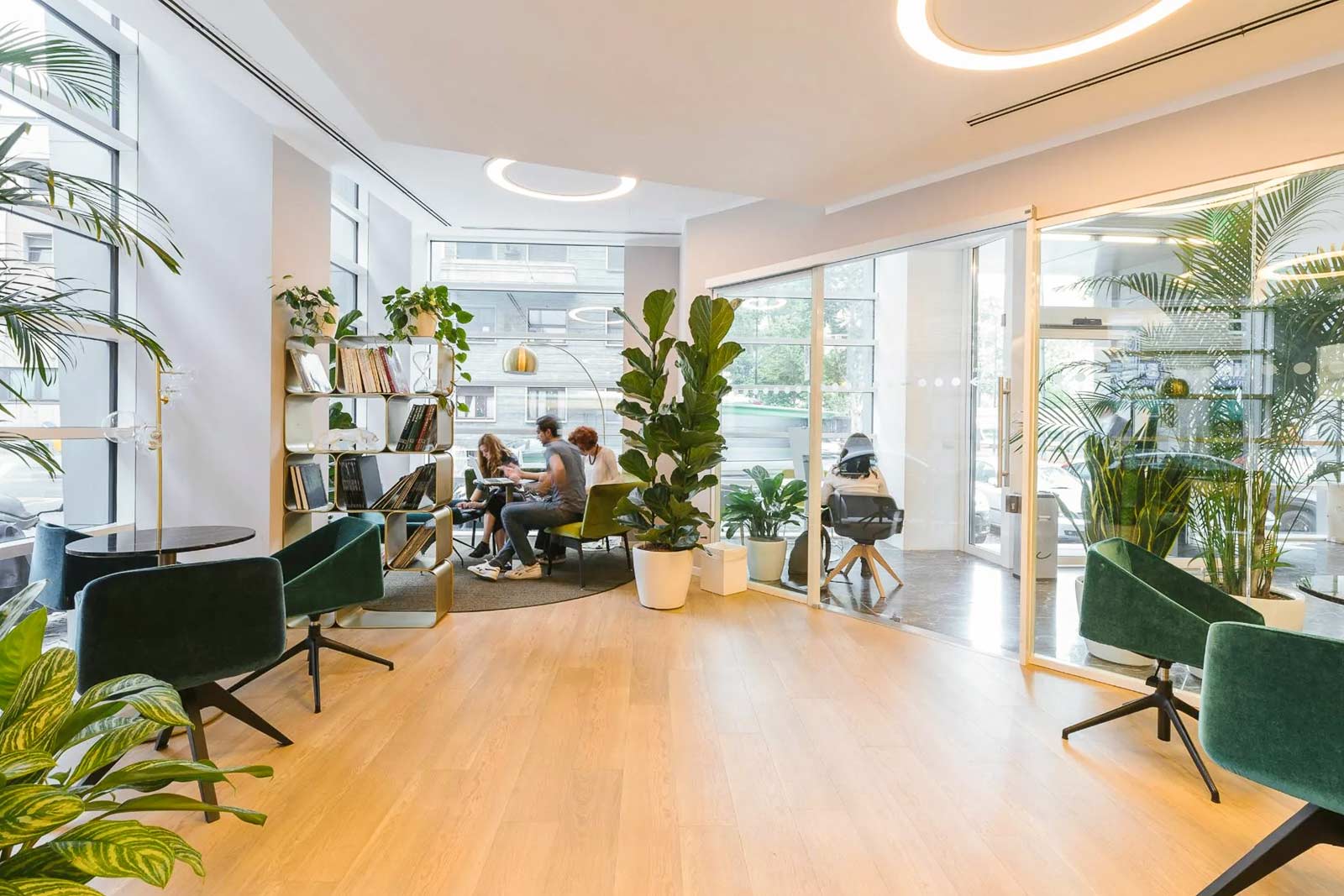
In a hybrid world, offices need to do more than just provide desks. They should support different types of work — from team meetings and creative sessions to focused tasks and client calls. That means moving away from rows of identical desks, and instead using flexible layouts, quiet zones, and rooms that can change depending on the day’s needs.
Hybrid working isn't a threat to the office — it’s a reinvention of its purpose. And managed offices are the agile solution many businesses didn’t know they needed.
Whether you’re a scale-up testing new markets, a corporate looking to decentralise, or a team seeking a dynamic HQ to attract top talent, managed space offers a ready-made solution with none of the hassle.
At Spacepoint, we specialise in helping businesses navigate this changing landscape. We match companies with managed office spaces that tick every box: location, layout, budget, and flexibility — all while future-proofing your workplace strategy.
Let’s talk. Our team of office specialists will help you find your ideal hybrid-ready home.
https://www.cipd.org | https://www.jll.co.uk | https://www.cbre.co.uk | https://www.bco.org.uk | https://www.theofficegroup.com | https://www.huckletree.com | https://www.wework.com/en-GB
Image by
Mikey Harris